Ammonia Fuel Valves After July 2026: What Marine Projects Must Specify
2026 Marine Regulation Update
A new regulatory phase for ammonia-powered shipping began on 1 July 2026. For shipyards, fuel-system integrators and valve buyers, the practical question is no longer whether ammonia will be considered as a marine fuel. The question is whether each valve can safely isolate, purge and control it.
This engineering briefing reviews the selection of ammonia fuel valves for bunkering stations, storage systems, fuel preparation rooms, engine supply lines and emergency shutdown arrangements.
Marine Fuel Systems
Double Block and Bleed
Leakage Control
Article Overview
- What Changed in July 2026?
- Why the Valve Train Is a Critical Safety Boundary
- Valve Requirements by System Zone
- Material Compatibility for Ammonia Fuel Valves
- Isolation, Bleeding and Nitrogen Purging
- Seats, Packing and External Leakage
- Procurement Checklist
- How JST Valve Supports Custom Projects
- Frequently Asked Questions
Ammonia has been handled at industrial scale for decades, particularly in fertilizer production and refrigeration. Marine fuel service, however, changes the operating context. The valves may be installed in compact machinery spaces, exposed decks, bunkering stations or enclosed fuel preparation rooms. They may also be expected to operate during an emergency, after long periods in one position and under conditions involving vibration, pressure cycling and rapid temperature changes.
This is why the term ammonia fuel valves should not be treated as a simple material description. A suitable valve is the result of a complete system review covering fluid condition, pressure, minimum temperature, isolation philosophy, purging sequence, allowable leakage, actuator response and classification requirements.
What Changed in July 2026?
Amendments to Chapter 16 of the International Code for the Construction and Equipment of Ships Carrying Liquefied Gases in Bulk entered into force on 1 July 2026. The amendments address the use of cargoes identified as toxic products as fuel and are directly relevant to ammonia carriers using cargo ammonia in their propulsion systems.
The regulatory change does not remove the need for project-specific risk assessment. Instead, it creates a clearer route for administrations, shipowners, classification societies and equipment suppliers to evaluate ammonia-fuelled designs.
The IMO Maritime Safety Committee also approved interim safety guidelines and training guidelines for ships using ammonia as fuel during MSC 111 in May 2026. These developments place stronger attention on fuel-system arrangements, leakage response, hazardous spaces, operational procedures and personnel competence.
1 JULY 2026
IGC Code Amendment
The relevant Chapter 16 amendments entered into force, creating a new regulatory milestone for toxic cargoes used as fuel.
MAY 2026
Safety Guidelines
MSC 111 approved interim safety guidance for ships using ammonia as fuel.
PROJECT IMPACT
More Detailed Specifications
Valve data sheets now need to connect more clearly with isolation, purging, detection and emergency shutdown logic.
Official regulatory references are available from the
IMO IGC Code amendment resolution
and the
IMO MSC 111 meeting summary.
Why the Valve Train Is a Critical Safety Boundary
An ammonia fuel system needs more than a valve that closes during a factory pressure test. It needs a valve arrangement that provides predictable isolation during bunkering, normal operation, maintenance and emergency shutdown.
The valve train may be required to stop fuel supply, isolate equipment, release trapped pressure into a controlled system and permit nitrogen purging before a pipe section is opened. Failure in any one of these steps can leave ammonia trapped between closed valves or allow fuel to migrate toward machinery spaces and occupied areas.
A recent DNV technical overview of ammonia propulsion describes a fuel valve train using double block and bleed isolation supported by nitrogen purging routines. This is a useful example of how valve selection and operating philosophy must be engineered together rather than purchased as separate items.
Read the DNV technical discussion:
Ammonia technology moves closer to powering deep-sea shipping.
Valve Requirements by System Zone
The same valve design should not automatically be repeated throughout the complete fuel system. Each location has a different duty, exposure level and failure consequence.
Mobile and tablet users can swipe left or right to view the complete table.
| System Zone | Typical Valve Function | Critical Requirement | Common Specification Gap |
|---|---|---|---|
| Bunkering Station | Isolation, emergency shutdown and controlled disconnection | Fast and reliable closure, remote operation and clear fail position | Actuator response time and emergency logic are not stated in the inquiry. |
| Storage Tank Outlet | Primary fuel isolation | Compatibility with tank pressure, temperature and emergency shutdown philosophy | Only normal operating pressure is provided; design and minimum temperature are omitted. |
| Fuel Preparation Room | Isolation around pumps, vaporizers, heaters and treatment equipment | Low external leakage, maintainability and safe drainage or purging | Packing and gasket requirements are left as the manufacturer’s standard. |
| Engine Fuel Supply | Automatic shut-off and double isolation | Repeatable closure, position feedback and integration with control logic | The valve is specified without the complete valve-train sequence. |
| Bleed and Purge Line | Depressurization and nitrogen purging | Controlled discharge destination, reliable shut-off and correct flow direction | Small-bore valves are treated as standard utility valves despite their safety function. |
| Vent or Treatment System | Routing ammonia vapour toward a safe treatment arrangement | Material compatibility, low pressure drop and defined backpressure | The downstream pressure and treatment-system interface are not defined. |
Material Compatibility for Ammonia Fuel Valves
Material selection should begin with the actual fluid condition. Anhydrous ammonia, ammonia containing water, refrigerated liquid ammonia and ammonia streams containing process contamination do not create identical service conditions.
Carbon steel and selected stainless steels are widely considered for ammonia systems, but suitability depends on temperature, pressure, fabrication route, impact requirements and project rules. Low-temperature sections may require qualified low-temperature materials and impact testing rather than a standard carbon steel body.
Copper, zinc and copper alloys should not be treated as acceptable ammonia-contact materials. IIAR material guidance for closed-circuit ammonia systems specifically excludes zinc, copper and copper alloys from ammonia containment and contact service.
Mobile and tablet users can swipe left or right to view the complete table.
| Material Group | Possible Role | What Must Be Verified | Procurement Comment |
|---|---|---|---|
| Carbon Steel | General anhydrous ammonia service within an approved temperature range | Minimum temperature, impact toughness, corrosion allowance and welding procedure | Do not assume a standard WCB valve is suitable for refrigerated sections. |
| Low-Temperature Steel | Refrigerated or low-temperature ammonia sections | Design minimum temperature, impact test values and complete pressure boundary material | Bonnet, stem, bolting and trim must be reviewed together with the body. |
| Austenitic Stainless Steel | Selected piping zones requiring corrosion resistance or low-temperature toughness | Grade, fabrication quality, weld condition, contaminants and project approval | Specify the exact grade rather than writing only “stainless steel.” |
| Nickel-Based Alloy | Exceptional mixed-media or corrosive conditions requiring project-specific evaluation | Complete chemical composition, temperature and justification for the upgrade | A more expensive alloy is not automatically a safer ammonia valve. |
| Copper, Brass or Zinc Alloys | Not intended for ammonia-contact pressure containment | Confirm that no wetted trim, fitting, coating or lubricant introduces restricted material | Check small components, not only the valve body. |
| Non-Metallic Seats and Seals | Seat sealing, stem packing and body gasket service | Chemical compatibility, minimum temperature, pressure, permeation and fire performance | There is no universal soft-seal choice for every ammonia fuel valve. |
The IIAR material reference can be reviewed here:
IIAR ammonia refrigeration system material guidance.
Isolation, Bleeding and Nitrogen Purging
Double block and bleed is more than three valves installed in one line. The arrangement must perform a defined sequence and send any released ammonia toward an approved destination.
A typical sequence may require the two isolation valves to close, the intermediate section to depressurize, nitrogen to displace residual ammonia and the control system to confirm valve position before maintenance or restart. The actual sequence must be developed and approved for the project.
Questions the Valve Data Sheet Should Answer
- Is the valve part of a double block and bleed arrangement?
- Must it fail closed, fail open or remain in its last position?
- How quickly must the emergency isolation valve close?
- Will the actuator receive pneumatic, hydraulic or electric power?
- Is position feedback required at both open and closed positions?
- Where will trapped ammonia be vented or treated?
- What nitrogen pressure and purge sequence will be used?
- Is the valve expected to close against the full design differential pressure?
A valve manufacturer cannot correctly size the actuator or confirm shut-off performance when these requirements are missing. Nominal pipe size and pressure class alone are not enough.
Seats, Packing and External Leakage
Ammonia toxicity makes external leakage a primary design concern. The stem packing, bonnet gasket, body joint, drain connection and actuator interface deserve the same attention as the main seat.
Soft-seated ball valves can provide tight shut-off, but the seat material must remain stable at the complete pressure and temperature range. Metal-seated valves may be considered where temperature, fire-safety philosophy, cycling or contamination makes a soft seat unsuitable. Neither option should be selected by habit.
For stem sealing, the project specification should define the required leakage standard, packing arrangement and test method. When a purchaser requests low-emission performance, the inquiry should also identify the exact standard and temperature range rather than using the general phrase “zero leakage.”
Seat
Confirm shut-off direction, differential pressure, cycle frequency, minimum temperature and fire-safety requirement.
Stem Packing
Define the leakage standard, packing material, live-loading requirement and maintenance access.
Body Joint
Review gasket compatibility, bolting, thermal cycling and pressure test requirements.
Small Connections
Drain, vent and instrument connections should receive the same material and leakage review as the main valve.
Procurement Checklist for Ammonia Fuel Valves
A complete inquiry reduces technical clarification time and prevents a standard industrial valve from being quoted for a safety-critical marine duty.
Mobile and tablet users can swipe left or right to view the complete table.
| Required Information | Why It Is Needed | Recommended Detail |
|---|---|---|
| Ammonia Condition | Determines material, seat and temperature requirements | Liquid or vapour, purity, water content and possible contaminants |
| Design Conditions | Controls pressure rating and complete pressure-boundary design | Design pressure, normal pressure, design temperature and minimum temperature |
| System Location | Defines the valve’s safety function | Bunkering, storage, preparation room, engine supply, vent, drain or purge line |
| Valve Function | Affects structure, seat and actuator selection | Isolation, ESD, control, non-return, bleed, purge or pressure relief interface |
| Actuation | Determines torque, fail action and response | Power source, fail position, closing time, feedback and hazardous-area requirement |
| Leakage Standard | Defines seat and stem sealing performance | Required test standard, medium, pressure and acceptance criteria |
| Approval Basis | Prevents late redesign and documentation gaps | Classification society, flag administration, IGC or IGF requirements and owner specification |
| Inspection Documents | Supports traceability and project acceptance | Material certificates, PMI, NDT, pressure tests, leakage tests and actuator records |
How JST Valve Supports Custom Ammonia Projects
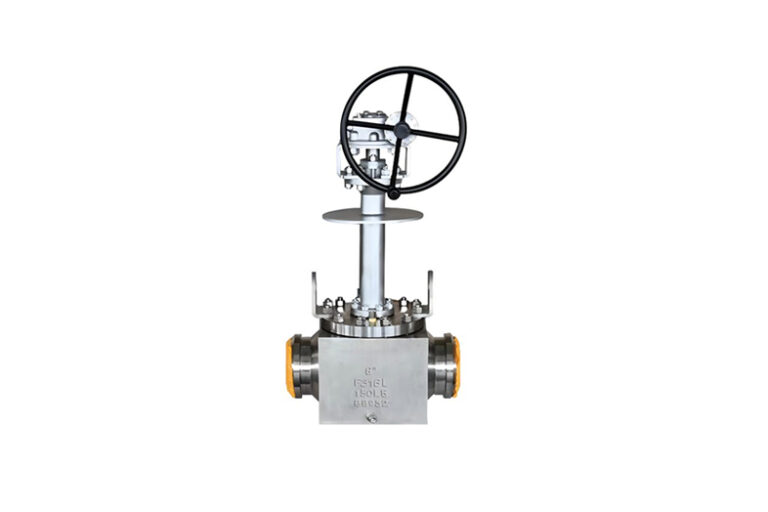
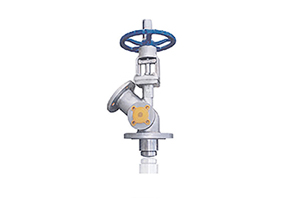
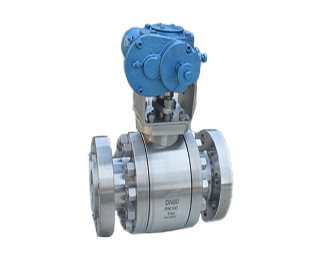
JST Valve manufactures customized industrial valves for corrosive, low-temperature, high-pressure and special-material applications. For ammonia-related projects, the engineering review can cover valve type, pressure-boundary material, trim, seat, stem packing, actuator arrangement and inspection requirements.
Depending on the service location, a project may require
ball valves,
globe valves,
check valves
or custom emergency isolation arrangements.
Before a final proposal is issued, JST Valve should receive the complete project data sheet and approval requirements. Marine ammonia fuel service should not be approved solely from a general catalogue description.
- Custom body, bonnet, stem and trim material review
- Soft-seat and metal-seat structure evaluation
- Pneumatic or electric actuator selection
- Fail-close and emergency shutdown arrangements
- Pressure, leakage, PMI and NDT inspection support
- OEM and project-specific documentation
Request an Ammonia Fuel Valve Technical Review
Send the ammonia condition, pressure, minimum temperature, valve size, system location, fail position, leakage requirement and classification standard.
JST Valve will review the available data and prepare a project-specific valve proposal.
Final Engineering Takeaway
The July 2026 regulatory milestone is likely to accelerate practical ammonia-fuel projects, but it does not make valve selection simpler. It makes the quality of the specification more important.
Reliable ammonia fuel valves must be evaluated as part of the complete fuel system. Material compatibility, minimum temperature, emergency closure, double isolation, controlled bleeding, nitrogen purging and external leakage performance all need to be defined before purchase.
The most effective procurement approach is to replace the phrase “ammonia valve required” with a complete description of where the valve is installed, what it must do and what happens if it fails.
Frequently Asked Questions About Ammonia Fuel Valves
What are ammonia fuel valves?
Ammonia fuel valves are isolation, control, check, bleed or emergency shutdown valves installed in ammonia bunkering, storage, preparation, supply, purging and treatment systems.
Can a standard industrial valve be used for marine ammonia fuel?
Not without a complete engineering review. The valve must match the ammonia condition, pressure, minimum temperature, leakage requirement, emergency function and marine approval basis.
Which materials should be avoided in ammonia-contact service?
Copper, zinc and copper alloys such as brass should not be used as ammonia-contact pressure-containing materials. Small wetted components and lubricants should also be checked.
Why is double block and bleed used in ammonia fuel systems?
It provides two isolation barriers and a controlled method for depressurizing or purging the section between them. The final arrangement and operating sequence must be approved for the project.
What information is required for an ammonia fuel valve quotation?
Provide ammonia composition and phase, design pressure, design and minimum temperature, valve size, system location, valve function, actuator type, fail position, leakage standard and classification requirements.
Regulatory and Technical References
Technical note: Final valve selection remains subject to the approved project specification, classification society requirements and applicable flag administration rules.