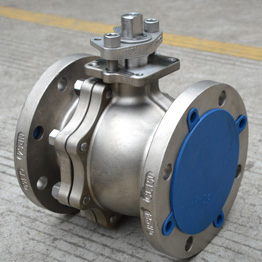
Tantalum Ball Valve: When Hastelloy and Stainless Steel Are Not Enough
JST Valve Product Engineering
A tantalum ball valve is not a routine upgrade from stainless steel.
It is a highly specialized solution for process lines where corrosion has become the dominant lifecycle problem.
This guide explains where tantalum ball valves make engineering sense, where they do not, how tantalum compares with Hastelloy, titanium and zirconium, and what buyers should specify before requesting a quotation.
Severe Acid Service
Special Alloy Valve
Custom Valve
Quick Answer
A tantalum ball valve should be considered when process corrosion is too severe for conventional stainless steel or selected nickel alloys and when the expected reduction in replacement, shutdown and maintenance cost justifies the premium material.
Tantalum Ball Valve Guide
There is a point in corrosive chemical processing where replacing one stainless steel valve with another stops making economic sense.
A valve may survive pressure testing and operate normally for months, yet gradually lose wall thickness, develop seat damage or begin leaking around its internal surfaces.
Repeated replacement solves the immediate maintenance problem but does not solve the corrosion mechanism.
This is where a tantalum ball valve becomes relevant.
Tantalum belongs to a very different category from conventional stainless steels.
It is selected for specialized chemical environments where the corrosion resistance of the wetted components has a much greater economic value than the initial purchase price.
What Is a Tantalum Ball Valve?
A tantalum ball valve is a quarter-turn isolation valve that uses tantalum in critical wetted components or in a specially engineered corrosion-resistant construction.
The operating principle is the same as a conventional ball valve: the stem rotates the ball through approximately 90 degrees.
When the bore of the ball aligns with the pipeline, flow passes through the valve.
When the ball rotates to the closed position, the seat seals against the ball surface and isolates the process.
What makes the product different is not the quarter-turn mechanism.
The difference is the material engineering required to handle media that may aggressively attack ordinary valve alloys.
Do not specify a tantalum ball valve simply because the medium is called “acid.”
Material selection should be based on exact chemical composition, concentration, temperature, pressure, impurities and operating conditions.
Why Engineers Consider Tantalum for Severe Chemical Service
Tantalum develops a highly stable protective oxide layer on its surface.
This passive layer is the reason tantalum can provide outstanding corrosion resistance in many severe chemical environments.
For valve users, the important benefit is not simply that the metal “does not rust.”
The engineering objective is to slow degradation of the pressure boundary, sealing area and other wetted components enough to achieve an acceptable service life.
1. High Resistance to Many Aggressive Acids
Tantalum can perform extremely well in many acidic chemical environments where conventional stainless steels experience rapid attack.
2. Useful for High-Value Process Lines
Tantalum normally makes the most sense when valve failure causes disproportionate economic consequences, such as an unplanned plant shutdown, hazardous chemical leakage or repeated replacement.
3. Suitable for Customized Wetted-Part Engineering
The entire valve does not always need to be approached as a simple solid-alloy commodity.
Depending on the approved engineering design, manufacturers may optimize how expensive corrosion-resistant material is used while maintaining pressure integrity and sealing reliability.
4. Potentially Lower Lifecycle Cost
The purchase price of tantalum equipment is high.
The business case therefore depends on lifecycle cost rather than initial cost.
A useful comparison includes:
- Initial valve purchase cost
- Expected service life
- Replacement frequency
- Maintenance labor
- Shutdown cost
- Production loss
- Safety and containment requirements
JST Tantalum Ball Valve Construction Options
JST Valve supplies tantalum ball valve configurations for different pipeline sizes, pressure classes and operating requirements.
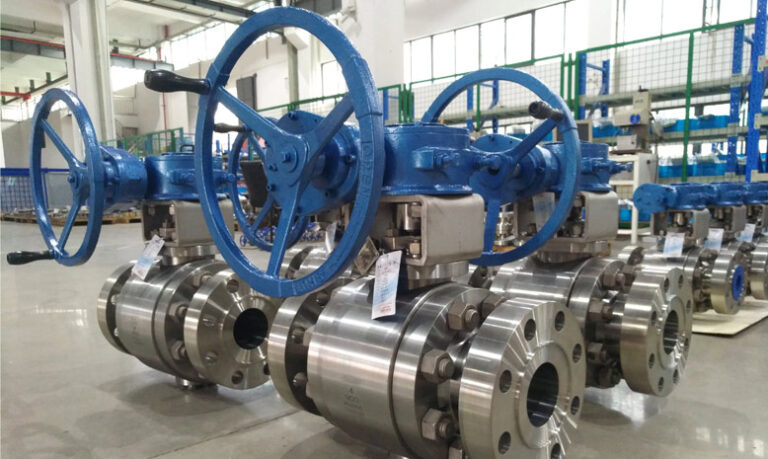
Available design options include floating and trunnion-mounted structures, full or reduced bore arrangements, soft or metal seats and multiple actuator configurations.
Mobile and tablet users can swipe left or right to view the complete table.
| Design Item | JST Valve Option | Engineering Purpose |
|---|---|---|
| Ball Support | Floating or Trunnion | Allows selection according to size, pressure and operating torque. |
| Port | Full Bore or Reduced Bore | Balances pressure drop, flow requirement, dimensions and cost. |
| Body | Side Entry, Split Body, 2-PC or 3-PC | Supports manufacturing, assembly and maintenance requirements. |
| Stem | Blow-Out Proof Stem | Improves stem retention under pressure. |
| Electrical Continuity | Anti-Static Device | Available where the service specification requires anti-static design. |
| Fire Safety | Fire-Safe or Non-Fire-Safe | Selected according to project safety requirements. |
| Seat | Soft Seat or Metal Seat | Allows optimization for shut-off, temperature and process conditions. |
| Connections | Flanged, Wafer, Threaded, BW or SW | Supports different piping and installation arrangements. |
| Operation | Lever, Gear, Electric, Pneumatic or Bare Shaft | Supports manual and automated process control. |
Where Are Tantalum Ball Valves Used?
Tantalum valves belong in applications where corrosion severity and process value justify their use.
Chemical Processing
Severe acid lines, reactors, chemical transfer systems and high-value process equipment.
Petrochemical Plants
Selected corrosive chemical streams where conventional valve materials have unacceptable service life.
Coal Chemical Plants
Specialized process areas handling aggressive chemicals under demanding plant conditions.
Pharmaceutical Processing
Selected corrosive process lines where high chemical resistance and process integrity are critical.
Pulp & Paper
Selected aggressive chemical duties requiring specialized material compatibility.
Specialty Chemicals
High-value production lines where repeated corrosion failure can cause significant downtime.
Tantalum vs Hastelloy vs Titanium vs Zirconium Ball Valves
One of the most common purchasing mistakes is assuming that there is a universal ranking of special alloys.
There is not.
Tantalum, Hastelloy, titanium and zirconium each respond differently to different chemical environments.
Correct material selection therefore depends on actual process chemistry rather than simply choosing the most expensive alloy.
Mobile and tablet users can swipe left or right to view the complete comparison.
| Material | Primary Selection Reason | Typical Positioning | Main Limitation |
|---|---|---|---|
| SS316 / 316L | Economic general corrosion resistance | Moderate chemical service | Can be unsuitable for aggressive acids and severe localized corrosion conditions. |
| Hastelloy | Broad severe chemical corrosion resistance | Chemical, petrochemical and severe process duty | Correct alloy grade and exact chemistry still need verification. |
| Titanium | Strong chloride and oxidizing-media performance | Seawater, chloride-rich and selected chemical service | Not a universal solution for reducing acid environments. |
| Zirconium | Excellent performance in selected severe acid media | Specialty chemical and strong-acid processing | Specific contaminants such as fluorides require careful evaluation. |
| Tantalum | Exceptional resistance in many severe acid environments | Critical high-corrosion process lines | Very high material cost and important chemical limitations mean selection must be justified. |
This comparison is a screening guide, not a corrosion chart.
Final material selection must be based on the exact process composition, concentration, impurities, pressure and temperature.
When a Tantalum Ball Valve Is the Wrong Choice
Tantalum has exceptional chemical properties, but it is not indestructible and it should not be promoted as a universal acid-resistant metal.
There are several cases where a different material or valve design may be more appropriate.
Hydrofluoric Acid or Significant Fluoride Exposure
Fluoride-containing environments require particular caution because the protective tantalum oxide film can be attacked.
Where Corrosion Is Not the Real Failure Mechanism
If the valve is failing because of abrasive solids, cavitation, flashing or mechanical impact, replacing the wetted metal with tantalum may not address the problem.
Low-Severity General Service
There is little economic reason to specify tantalum when SS316, duplex stainless steel, Hastelloy or another lower-cost material already provides adequate life.
When Process Data Is Incomplete
Tantalum should not be selected simply because the buyer writes “strong acid” on the RFQ.
Complete process chemistry is necessary before approval.
Floating or Trunnion Tantalum Ball Valve?
JST Valve offers both floating and trunnion-mounted tantalum ball valve configurations.
The correct structure depends mainly on valve size, pressure, operating torque and project design.
Mobile and tablet users can swipe left or right to view the complete table.
| Feature | Floating Ball Valve | Trunnion Ball Valve |
|---|---|---|
| Ball Support | Ball is primarily supported by the seats. | Ball is mechanically supported by trunnions. |
| Typical Use | Small to medium sizes depending on pressure class. | Larger sizes and higher torque applications. |
| Operating Torque | Can increase significantly with size and differential pressure. | Support arrangement helps control operating torque on larger valves. |
| Selection Basis | Size, pressure, seat design and service. | Size, pressure, torque, actuator and project requirements. |
JST Tantalum Ball Valve Size and Pressure Range
JST Valve currently lists tantalum ball valve designs from Class 150 through Class 1500, with floating and trunnion configurations available across different size ranges.
Mobile and tablet users can swipe left or right to view the complete table.
| Structure | Class | Typical Size Range |
|---|---|---|
| Floating | Class 150 | 1/2″ – 10″ / DN15 – DN250 |
| Floating | Class 300 | 1/2″ – 8″ / DN15 – DN200 |
| Floating | Class 600 | 1/2″ – 6″ / DN15 – DN150 |
| Floating | Class 900 | 1/2″ – 3″ / DN15 – DN80 |
| Floating | Class 1500 | 1/2″ – 2″ / DN15 – DN50 |
| Trunnion | Class 150 | 6″ – 40″ / DN150 – DN1000 |
| Trunnion | Class 300 / 600 | 4″ – 40″ / DN100 – DN1000 |
| Trunnion | Class 900 / 1500 | 4″ – 24″ / DN100 – DN600 |
Soft-Seated or Metal-Seated Tantalum Ball Valve?
Body material is only one part of the valve specification.
Seat selection can determine whether the valve achieves the required leakage performance and whether it survives the actual operating temperature and process conditions.
Soft-Seated Design
Soft seats are normally preferred when very tight shut-off and relatively low operating torque are important and when the selected seat polymer is compatible with the chemical medium and temperature.
Metal-Seated Design
Metal seats may be considered for higher temperature, contaminated process streams, fire-safe service or conditions where soft-seat materials cannot provide adequate stability.
Do not send an RFQ stating only “Tantalum Ball Valve DN50 Class 300.”
The manufacturer still needs the media composition, concentration, temperature and leakage requirement to select the seat and complete wetted construction.
Design and Testing Standards
JST Valve’s tantalum ball valve product range can be designed in accordance with recognized industrial valve requirements.
- ASME B16.34 – valve design requirements for applicable flanged, threaded and welding-end valves
- API 6D – pipeline valve design requirements where applicable
- API 598 – valve inspection and pressure testing
- Project-specific inspection and documentation requirements can be reviewed separately
What to Send When Requesting a Tantalum Ball Valve Quotation
Special alloy valves should not be quoted accurately from nominal size alone.
Providing the following information at the beginning of the inquiry helps avoid unnecessary material cost and prevents incorrect valve selection.
Mobile and tablet users can swipe left or right to view the complete checklist.
| RFQ Information | Example | Why JST Needs It |
|---|---|---|
| Process Medium | Sulfuric acid, hydrochloric acid, mixed acid, process chemical | Determines whether tantalum is chemically appropriate. |
| Concentration | wt.% or complete chemical analysis | Corrosion resistance can change significantly with concentration. |
| Impurities | Fluoride, chloride, solids, oxidizers or other process chemicals | Minor constituents can change material compatibility. |
| Temperature | Normal, design and upset temperature | Affects material compatibility and seat selection. |
| Pressure | Normal pressure, design pressure and differential pressure | Controls pressure class, structure and actuator torque. |
| Valve Size | DN50 / 2″ | Helps determine floating or trunnion configuration. |
| Connection | RF, BW, SW, threaded or project-specific | Required for dimensional and piping design. |
| Operation | Lever, gear, pneumatic or electric | Required for torque and actuator selection. |
| Leakage Requirement | Project specification or applicable test standard | Determines seat and testing requirements. |
| Quantity | 1 pc, 5 pcs, 20 pcs | Required for manufacturing and commercial quotation planning. |
JST Valve Tantalum Ball Valve Solutions
JST Valve manufactures special alloy valves for highly corrosive and demanding industrial applications.
The company’s tantalum ball valve range includes floating and trunnion-mounted configurations, full and reduced bore designs, soft and metal seats, manual and automated operation and multiple end-connection options.
You can view the JST product page here:
JST Tantalum Ball Valves
Buyers comparing other special materials can also review the complete
JST Special Alloy Ball Valve Range
including Hastelloy, titanium, zirconium, Monel, nickel alloy and duplex designs.
Material Review
Engineering evaluation based on medium, concentration, temperature and contaminants.
Custom Structure
Floating, trunnion, full bore, reduced bore and project-specific construction options.
Automation
Gear, pneumatic and electric actuation can be reviewed according to operating requirements.
Testing
Pressure testing, inspection and project documentation can be specified according to order requirements.
Severe Corrosion Project?
Ask JST Valve Whether Tantalum Is Really Necessary
Send us your process medium, concentration, temperature, pressure, impurities, valve size and quantity.
Our engineering team can review whether tantalum is appropriate or whether Hastelloy, zirconium, titanium or another special alloy can provide a more practical solution.
Is a Tantalum Ball Valve Worth the Cost?
Sometimes yes. Sometimes absolutely not.
That distinction is exactly why tantalum valves should be treated as engineered products rather than premium versions of ordinary stainless steel valves.
If a lower-cost material can reliably achieve the required service life, there is little reason to specify tantalum.
But when severe corrosion repeatedly destroys conventional valves and every replacement causes shutdown, labor and production loss, the economics can change quickly.
The correct decision is therefore not based on material price alone.
It is based on process chemistry, expected service life and total lifecycle cost.
FAQ: Tantalum Ball Valves
What is a tantalum ball valve?
A tantalum ball valve is a quarter-turn isolation valve using tantalum in critical corrosion-resistant wetted components or an engineered tantalum construction for severe chemical service.
Why is tantalum used for chemical valves?
Tantalum develops a highly stable protective oxide film and can provide outstanding corrosion resistance in many aggressive chemical environments.
Is tantalum better than Hastelloy?
Not universally. The better material depends on the exact process chemistry, concentration, temperature and contaminants. Hastelloy may be more economical and completely adequate in many applications.
Can tantalum be used for hydrofluoric acid?
Fluoride-containing environments require special caution and tantalum should not be assumed suitable. Complete process chemistry must be reviewed before material approval.
Does JST Valve manufacture trunnion tantalum ball valves?
Yes. JST Valve lists both floating and trunnion-mounted tantalum ball valve configurations for different pressure classes and size ranges.
What information is required for a tantalum ball valve quotation?
Provide the medium, chemical concentration, impurities, design pressure, operating pressure, temperature, valve size, connection, operation method, leakage requirement and quantity.
Technical note: The material information above is intended for preliminary engineering screening only. Final material selection should be confirmed using complete process chemistry, concentration, temperature, pressure, impurity data and applicable project standards.