Carbon Capture Valves in 2026: 7 Material Selection Rules for CO2 Service
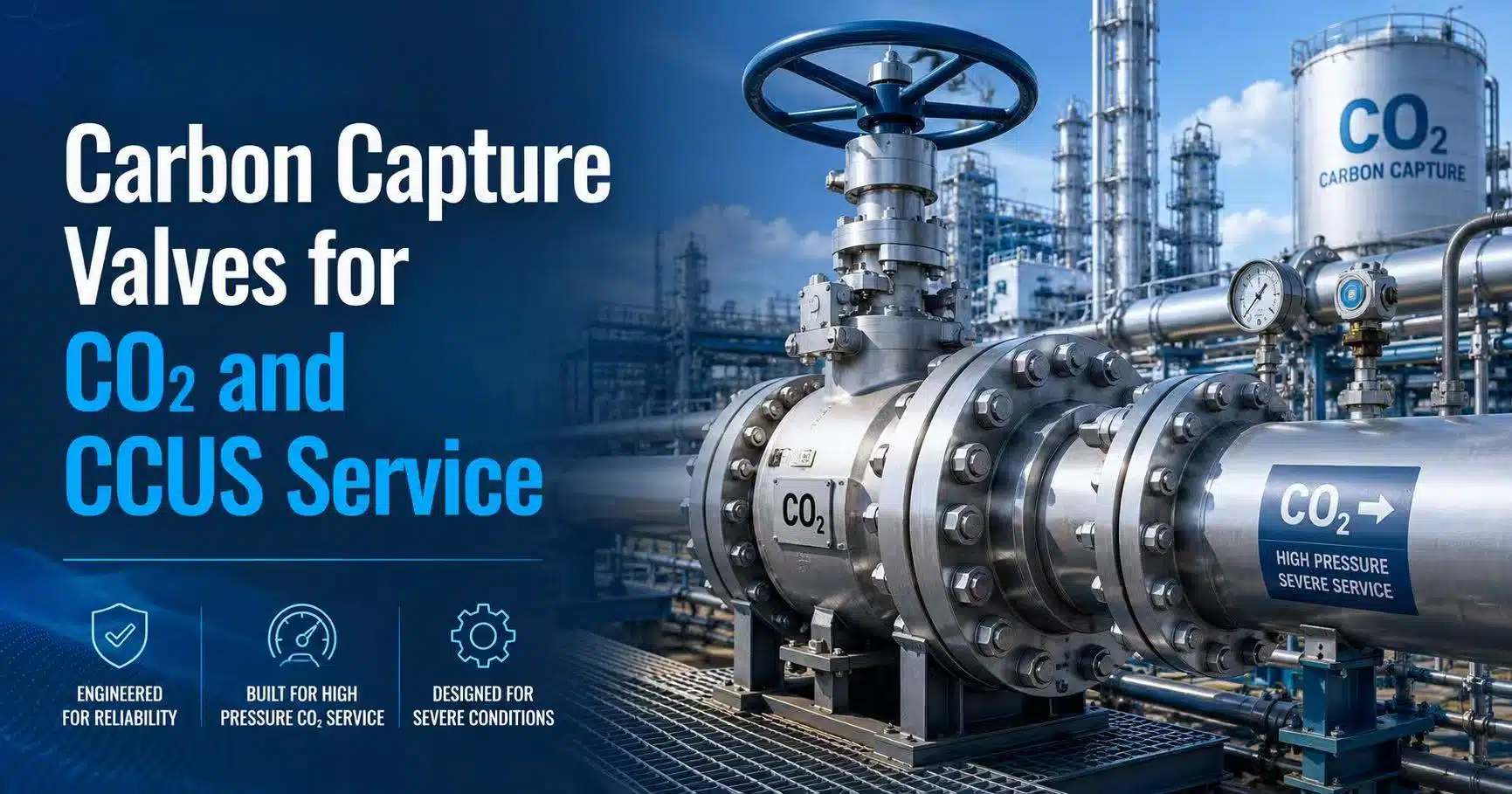
Carbon capture valves are becoming critical components in CO2 capture, compression, transportation, injection and storage systems.
In CCUS projects, the right valve must handle corrosion, pressure cycling, leakage control, low-temperature effects and severe service conditions.
Carbon Capture Valves
CO2 Service
CCUS Valves
Corrosion Resistant Alloys
Table of Contents
Carbon capture, utilization and storage, commonly known as CCUS, is expanding across power generation, cement, steel, refining, hydrogen production, chemical processing and offshore energy projects.
According to the International Energy Agency, CCUS is an important technology for reducing emissions in hard-to-abate sectors, and the project pipeline has grown strongly in recent years.
You can review the official IEA CCUS overview here:
IEA Carbon Capture, Utilisation and Storage.
In these projects, carbon capture valves are not ordinary pipeline accessories.
They are used to isolate CO2 lines, protect compressors, control pressure, prevent reverse flow, regulate injection systems and maintain safe operation during start-up, shutdown and pressure cycling.
A poor valve selection can lead to leakage, corrosion failure, seat damage, unexpected shutdown and high maintenance cost.
The U.S. Department of Energy describes CCUS as a process that captures CO2 emissions and either reuses or stores them in underground geologic formations.
You can read the official DOE explanation here:
U.S. DOE Carbon Capture, Utilization & Storage.
Dry CO2, wet CO2, dense phase CO2, supercritical CO2 and CO2 mixed with impurities can require different valve materials and sealing structures.
Why Carbon Capture Valves Matter in 2026
Carbon capture systems usually include capture units, dehydration units, compression stations, transportation pipelines, injection facilities and long-term storage infrastructure.
Each section has different operating conditions.
A valve installed in a low-pressure capture unit may face completely different risks compared with a valve installed after a CO2 compressor or near an injection well.
For this reason, carbon capture valves must be selected based on actual working conditions, not only by nominal pressure or valve size.
Engineers should evaluate CO2 phase, water content, impurity composition, temperature range, pressure rating, leakage requirement, valve function and inspection standard before finalizing the valve design.
In many CCUS projects, CO2 may be transported under high pressure to improve efficiency.
When pressure and temperature change, CO2 may behave as gas, liquid, dense phase or supercritical fluid.
These phase changes can affect pressure drop, sealing performance, low-temperature behavior and material selection.
Main Technical Challenges in CO2 Service
1. Wet CO2 Corrosion
When CO2 combines with water, carbonic acid may form.
This can increase corrosion risk, especially for carbon steel and unsuitable low-alloy materials.
2. Acidic Impurities
CO2 streams may contain oxygen, sulfur compounds, nitrogen oxides, chlorides or acid gas.
These impurities can make the service more aggressive.
3. High Pressure
CO2 compression and transportation lines can operate under high pressure.
Valve body, bolting, bonnet gasket and seat structure must match the design pressure.
4. Low Temperature
Rapid depressurization may cause cooling.
Valve materials and sealing components must maintain toughness and dimensional stability at the lowest operating temperature.
5. Leakage Control
External leakage control is important in CO2 service.
Stem packing, body gaskets, flange connections and seat sealing should be reviewed carefully.
6. Pressure Cycling
Start-up, shutdown and compressor operation can create pressure fluctuation.
Carbon capture valves should be suitable for repeated operation and cyclic stress.
Material Selection for Carbon Capture Valves
Material selection is the foundation of reliable carbon capture valves.
The correct material depends on CO2 purity, water content, chloride level, acidic impurities, operating pressure, operating temperature and required service life.
A valve material suitable for clean dry CO2 may not be suitable for wet CO2 containing chlorides or acid gas.
For standard dry CO2 service, carbon steel or stainless steel may be considered after engineering review.
For wet CO2, offshore CCUS, acid gas, chemical utilization or severe corrosion conditions, higher alloy materials such as duplex stainless steel, super duplex stainless steel, Hastelloy, Inconel, Monel, titanium or zirconium may be required.
Mobile users: swipe left or right to view the full table.
| Material | Typical Advantage | Possible CCUS Application | Engineering Note |
|---|---|---|---|
| Carbon Steel | Cost-effective and widely available | Selected dry CO2 service and non-corrosive utility lines | Not recommended for wet CO2 or acidic impurity service without detailed corrosion evaluation. |
| Stainless Steel | Better corrosion resistance than carbon steel | Cleaner CO2 process units and moderate corrosion conditions | Confirm chloride level, water content, temperature and pressure before selection. |
| Duplex / Super Duplex Stainless Steel | High strength and improved chloride resistance | Offshore CCUS, seawater-related systems and chloride environments | Suitable where both mechanical strength and corrosion resistance are required. |
| Hastelloy | Excellent resistance to aggressive chemical corrosion | Acid gas, wet CO2, chemical utilization and severe corrosion | Useful when stainless steel does not provide enough corrosion life. |
| Inconel / Nickel Alloy | High-temperature strength and strong corrosion resistance | Refineries, high-temperature CO2 service and severe chemical plants | Often selected for combined high temperature, pressure and corrosion conditions. |
| Titanium | Excellent corrosion resistance and lightweight structure | Selected chloride-containing systems and seawater-related service | Selection should be based on complete media chemistry and temperature conditions. |
| Zirconium | Outstanding resistance in selected strong acid environments | Severe chemical processing and special acid-related CO2 streams | Used when other metals cannot provide acceptable corrosion resistance. |
Recommended Valve Types for CCUS Applications
CO2 Ball Valves
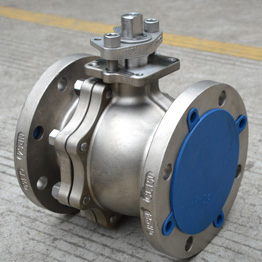
Ball valves are commonly used for quick isolation in CO2 capture units, compressor lines, storage systems and transportation pipelines.
For CCUS applications, engineers should review seat material, stem packing, fire-safe design, anti-static structure, pressure rating and leakage performance.
JST Valve manufactures industrial ball valves in stainless steel, duplex stainless steel, Hastelloy, Inconel, Monel, titanium, zirconium and other special alloy materials for demanding industrial service.
CO2 Check Valves
Check valves help prevent reverse flow and protect compressors, pumps, pipelines and injection systems.
In carbon capture systems, check valve selection should consider flow direction, cracking pressure, pressure drop, closing speed and possible vibration.
CO2 Globe Valves and Control Valves
Globe valves and control valves are used for flow regulation and pressure control.
In CCUS service, control valve trim should be reviewed for pressure drop, erosion, noise, vibration, flashing risk and low-temperature operation.
CO2 Gate Valves
Gate valves are often selected for full-open or full-close isolation in larger CO2 pipelines.
For transportation and storage service, body material, wedge sealing surface, stem packing and bonnet gasket should match the pressure and media conditions.
Special Alloy Valves
Special alloy valves are recommended when CO2 is mixed with acid gas, chlorides, moisture or aggressive chemical media.
Hastelloy, Inconel, Monel, duplex stainless steel, super duplex stainless steel, titanium and zirconium can be considered according to actual corrosion conditions.
7 Material Selection Rules for Engineers
1. Confirm Whether the CO2 Is Dry or Wet
This is the first rule for selecting carbon capture valves.
Dry CO2 may allow more material options, while wet CO2 can create carbonic acid corrosion.
If water is present, the corrosion evaluation must become much stricter.
2. Identify All Impurities in the CO2 Stream
CO2 captured from industrial plants may contain oxygen, sulfur compounds, nitrogen oxides, chlorides, amines or other chemicals.
These impurities can influence body material, trim material, gasket selection and seat material.
3. Define the CO2 Phase
CO2 can exist as gas, liquid, dense phase or supercritical fluid depending on pressure and temperature.
The valve must be selected according to the actual phase behavior, especially in compression, transportation and injection systems.
4. Check the Lowest Operating Temperature
Rapid decompression can reduce temperature and affect toughness, sealing performance and dimensional stability.
Engineers should confirm the lowest expected temperature and select suitable metallic and non-metallic materials.
5. Review Seat and Packing Compatibility
Seat and packing materials must be compatible with CO2, pressure, temperature and operating cycles.
For critical carbon capture valves, low-emission packing, metal seats or fire-safe design may be required.
6. Consider Pressure Cycling and Fatigue
CCUS systems may experience repeated start-up, shutdown and pressure fluctuation.
Valve bodies, stems, bolting, gaskets and sealing surfaces should be suitable for cyclic operation and long-term reliability.
7. Require Testing and Documentation
Buyers should request material certificates, pressure test reports, dimensional inspection records and applicable project documentation.
For severe service, PMI, NDT, leakage testing and customized inspection procedures may also be required.
Specification Checklist for Carbon Capture Valves
Before requesting a quotation, engineers and purchasing teams should prepare complete working condition data.
This helps the valve manufacturer select the correct material, structure, seal and inspection plan.
Mobile users: swipe left or right to view the full table.
| Required Data | Why It Matters |
|---|---|
| CO2 phase | Gas, liquid, dense phase or supercritical CO2 affects pressure, temperature and valve design. |
| Water content | Determines whether carbonic acid corrosion may become a major issue. |
| Impurity composition | Oxygen, sulfur compounds, nitrogen oxides and chlorides can change material selection. |
| Design pressure and temperature | Controls valve rating, body material, gasket selection and testing requirements. |
| Lowest operating temperature | Important for toughness, sealing stability and rapid decompression conditions. |
| Valve type and size | Affects flow capacity, pressure drop, installation and operation method. |
| Applicable standard | Helps align design, inspection, testing and documentation with project requirements. |
How JST Valve Supports CO2 Severe Service
Fujian JST Valve Manufacturing Co., Ltd. focuses on high-performance industrial valves for corrosive, abrasive, high-temperature and high-pressure applications.
For carbon capture valves and CO2 service, JST Valve can support engineers and buyers with material selection, valve structure optimization, sealing design and customized manufacturing.
JST Valve provides industrial valves in stainless steel, duplex stainless steel, super duplex stainless steel, Hastelloy, Inconel, Monel, titanium, zirconium and other special materials.
These materials can be used for chemical plants, refineries, offshore platforms, acid service, slurry service, seawater systems and severe corrosion applications.
- Custom material selection for carbon capture valves and CO2 service
- Ball valves, check valves, gate valves, globe valves, plug valves and special alloy valves
- Material options including Hastelloy, Inconel, Monel, titanium, zirconium and duplex stainless steel
- Engineering support for wet CO2, acid gas, chloride environments and severe corrosion
- OEM and ODM valve manufacturing according to project requirements
- Pressure testing, inspection and technical documentation support
Conclusion
Carbon capture valves are essential for reliable CCUS operation.
The correct valve must handle CO2 corrosion, pressure cycling, leakage control, temperature changes and severe service conditions.
Material selection is especially important when CO2 contains water, acid gas, chlorides or other aggressive impurities.
Engineers should not choose carbon capture valves only by valve type, pressure class or price.
A complete review of media composition, CO2 phase, pressure, temperature, valve function, sealing requirement and inspection standard is necessary for safe long-term operation.
If your project involves carbon capture, CO2 transportation, wet CO2, acid gas, offshore corrosion, high pressure or severe chemical service, JST Valve can help provide a customized valve solution based on actual working conditions.
Need Carbon Capture Valves for CO2 or CCUS Service?
JST Valve can help evaluate your working conditions and recommend suitable valve materials, sealing structures and inspection requirements for carbon capture and severe CO2 service.
Send us your CO2 phase, water content, impurity composition, pressure, temperature, valve size, material requirement and applicable standard.
Our engineering team will support your project with a practical valve solution.
FAQ: Carbon Capture Valves
What are carbon capture valves?
Carbon capture valves are industrial valves used in CO2 capture, compression, transportation, injection and storage systems.
They must be selected according to CO2 phase, pressure, temperature, water content, impurities and sealing requirements.
Which valves are used in CCUS systems?
Ball valves, check valves, gate valves, globe valves, control valves and special alloy valves can be used in CCUS systems depending on the application, pressure, media condition and control requirement.
Why is wet CO2 service corrosive?
When CO2 is combined with water, carbonic acid may form and increase corrosion risk.
If acidic impurities or chlorides are also present, corrosion conditions can become more severe.
Can carbon steel valves be used for CO2 service?
Carbon steel valves may be used in selected dry and non-corrosive CO2 service, but they are usually not suitable for wet CO2 or corrosive impurity service without detailed corrosion evaluation.
When should special alloy valves be selected?
Special alloy valves should be considered when CO2 contains water, acid gas, chlorides, high temperature, high pressure or other aggressive chemical conditions.
Hastelloy, Inconel, duplex stainless steel, super duplex stainless steel, titanium and zirconium may be selected according to the actual media.
What information is needed to quote carbon capture valves?
Buyers should provide CO2 phase, water content, impurity composition, pressure, temperature, valve size, connection type, material requirement, operation method and applicable standard.