-
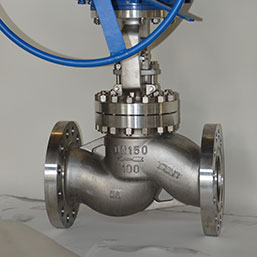
The microstructure of the duplex stainless steel globe valve consists of a mixture of an austenitic phase and a ferrite phase. Therefore, the duplex steel has both austenitic and ferritic stainless steel properties.
The duplex globe valve uses stainless steel which has stronger resistance to corrosion than the commonly used grades of stainless steel valves, namely 304 valves and 316 valves. Duplex stainless steel valves are widely used in various industries such as the chemical industry, seawater desalination, shipbuilding, petrochemical industry, oil, and gas industry.
-
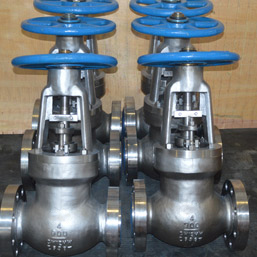
There are many types of Hastelloy valves such as Hastelloy B2, Hastelloy B3, Hastelloy C22, and Hastelloy C276. Hastelloy series alloys UNS are also known as N10665, N10276, N06022, N10675, N06455. The DIN specifications are 2.4617, 2.4600, 2.4602, 2.4819. The most common form of cast Hastelloy used for valves is the A494 CW12MW and A494 CX-2MW.
-
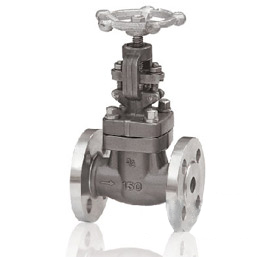
Inconel Globe Valves are made up of the Inconel family of alloys. There are different types of compositions in different Inconel grades and they are used differently to cater to different application types. The Inconel ASTM A494 CY40 globe valves are used in exhaust systems as they can withstand high temperatures. The applications such as acid production, chemical processing, food processing, petrochemicals, chemicals, and the oil and gas industry.
-
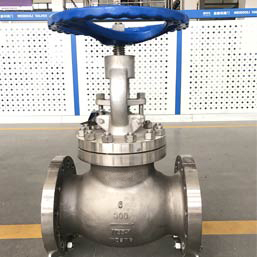
Monel® is an excellent trim material for aluminum-bronze body valves for seawater service. Monel® is also highly suitable for oxygen service and is highly resistant to corrosion, this range of monel globe valves has been specially designed for gaseous oxygen service. These valves can also be installed behind a barrier (see below figure), with or without gearbox. They are extensively used in industry, especially in steel plants.
Main performance and scope of application: Monel alloy valves have excellent corrosion resistance to hydrofluoric acid (HF), uranium fluoride (UF6, UF4), dilute sulfuric acid, hydrochloric acid, phosphoric acid, acetic acid, strong alkaline solutions, brine, seawater, and halogen elements, so they are widely used in petrochemical, petroleum refining, atomic energy industry, pharmaceutical industry and other large modern enterprises on the key parts of the piping system
-
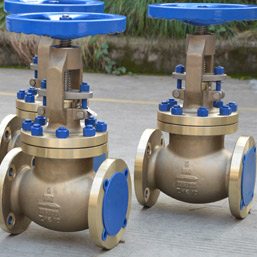
Aluminum-bronze valves are a suitable and far cheaper substitute to duplex, super duplex, and monel for many seawater applications, especially in low-pressure applications. Its major drawback is its low tolerance to heat. Aluminium-bronze is also referred to as nickel-aluminum bronze and abbreviated as NAB.
C95800 offers superior saltwater corrosion resistance. It also is resistant to cavitation and erosion. Along with the advantage of pressure tightness, this high-strength alloy is excellent for welding and is available in many forms at a lower cost to you. So NAB C95800 Globe valves are typically used for shipbuilding with seawater or fire water application.
-

The Nickel 200/nickel 201 Globe Valve is made up of a commercially pure nickel grade. It is very corrosion resistant and strong with particular resistance against acids and oxidizing agents, So the nickel alloy valves are used in chemical and petrochemical industries.
-
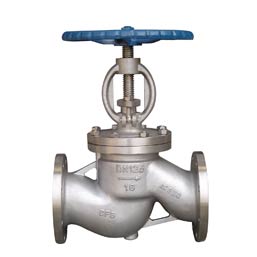
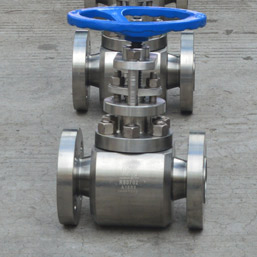
Stainless steel globe valves feature molybdenum-alloyed construction and offer high resistance to pitting corrosion. Globe valves are named for their spherical body shapes. Each features a hand wheel and threaded stem that causes a disc-shaped plug inside the valve to open or shut off the flow of air, fluid, or gas. These valves gradually open and close to adjust and regulate flow.
Wheel handles open and closes with multiple turns, providing more controlled, shock-resistant flow than lever handles.
-
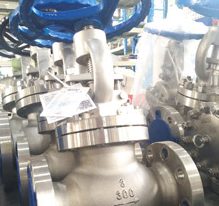
Common super austenitic stainless steels used in the valve industry are UNS S31254 (254SMO and AL6XN). They are predominantly used to obtain both higher strength and improved resistance to crevice corrosion chloride pitting compared to 316 SS. This improved corrosion resistance comes from the higher Ni and Mo content, and nitrogen strengthens the material. Desalination, food processing, chemical processing, and even seawater services use super austenitic stainless steels as an economical selection in cases where high strength and good corrosion resistance are needed.
-
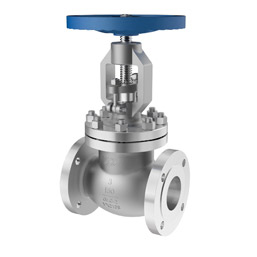
Titanium alloy valves are known for their high strength to weight ratio. Titanium alloy is a low-density strong metal with good ductility. Titanium valves are available in a variety of material grades from the most commonly used Grade 2 to alloyed titanium Gr. 5 ,Gr. 7 and Gr. 12. Titanium alloys are aliased R50400, R50550, and R56400 in UNS. The DIN standards are named 3.703, 3.7035, 3.7164, and 3.7165, while the ASTM designation is A182 316Ti. The titanium globe valves are made up of titanium casing with the disc being made of different grades of titanium or other alloy materials. The applications of the titanium valves can be seen in high corrosive, high temperature, high vibration environments such as the titanium exhaust valves in jet engines and in aircraft parts.
In order to regulate or controls the flow of fluids, the provided valve is used in various fields like petroleum, marine, aerospace, chemical, food, and beverage, etc. By a crew of experienced professionals, it is manufactured with the use of sophisticated tools and techniques at our premises.
-
Zirconium, which has comprehensive properties such as high-temperature resistance, good corrosion resistance, processability, good performance, and low thermal neutron absorption cross-section, is an important structural material for nuclear reactors. Zirconium and its alloys are unique corrosion-resistant materials in alkali solutions of various concentrations and molten alkali, even better than tantalum.